The people behind Syntony

Team

Our team and specialist collaborators work across evaluation science, national-security decision making and domain research.

Leadership

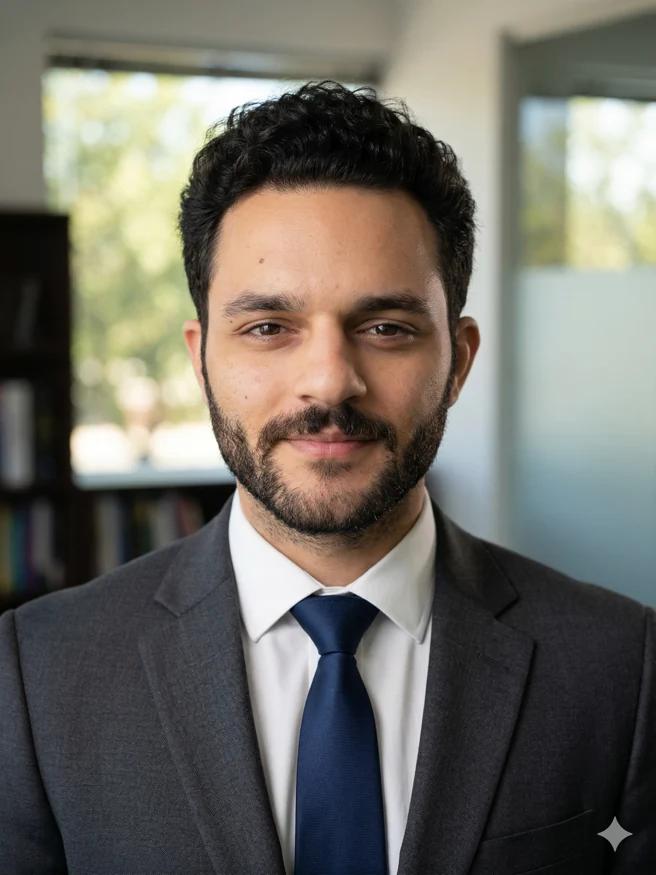
Nathan Heath

Nathan Heath

Founder and CEO

Nathan Heath is a decision scientist, AI security practitioner, and national security expert with over 14 years of experience. He founded Syntony to expose how AI systems fail and give the institutions deploying them the evidence to act.

Before founding Syntony, he spent six years as a decision scientist supporting the U.S. Department of Defense, focused on emerging technology risk, systems thinking and security cooperation. He spent three years red teaming for OpenAI and Anthropic. He has held startup leadership roles in augmented reality, healthcare technology and technology education for peace, and his experience also includes the United Nations, the U.S. Department of State, Harvard Law School and the Hudson Institute.

He is a Truman National Security Fellow and an Expert Advisor to the Cloud Security Alliance on catastrophic AI risk. He holds an M.A. in Law and Diplomacy from The Fletcher School, and regularly consults, writes, and speaks on AI safety and security.

His writing has appeared in War on the Rocks, World Politics Review, PRISM and GNET.

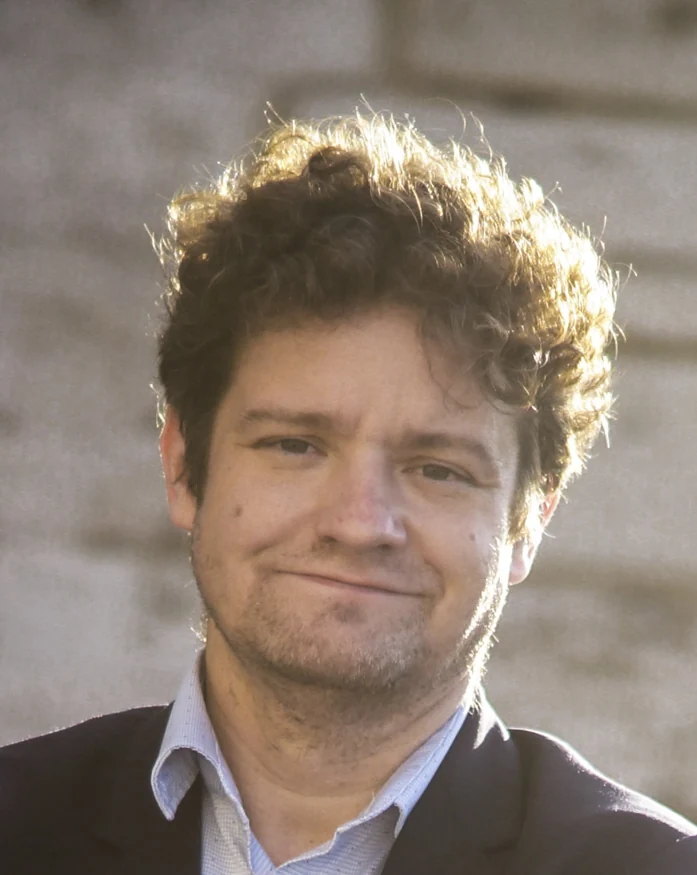
Dr. Wm. Matthew Kennedy

Dr. Wm. Matthew Kennedy

Head of Research Strategy and Evaluations

Dr. Wm. Matthew (Matt) Kennedy is Syntony’s Head of Research Strategy and Evaluations, overseeing research engagement and evaluation science. He shapes research priorities across AI evaluation and red teaming, guides the work of research affiliates, and supports study design, academic publications, and research partnerships.

He is also an AI+ Senior Research Fellow at King’s College London. His research focuses on technical AI governance, evaluation and red teaming methods, and the foundations of evaluation as a discipline. He also studies AI’s role in education, legal reasoning, and knowledge production.

Before joining King’s, Matt was a Marie Skłodowska-Curie Postdoctoral Fellow at the Oxford Internet Institute. He brings industry experience in UX/UI research and AI evaluation.

He holds a master’s degree from the University of Oxford and a PhD from the University of Sydney (2017), where his doctoral research examined the history of colonialism and international law.

Fellows and affiliates

Vamsi Krishna Munjuluri

Vamsi Krishna Munjuluri

AI Engineering Fellow

Vamsi Krishna Munjuluri is Syntony’s inaugural AI Engineering Fellow. He is a research master’s student at Mila and Université de Montréal, finishing a thesis on LLM agents that write and tune HVAC controllers for buildings.

Much of that work turned out to be debugging the evaluation itself. In one case, a scoring window was short enough to make an unstable controller look like the best one. He is now building tools that separate what the model is doing from what the evaluation harness is doing in agent evals.

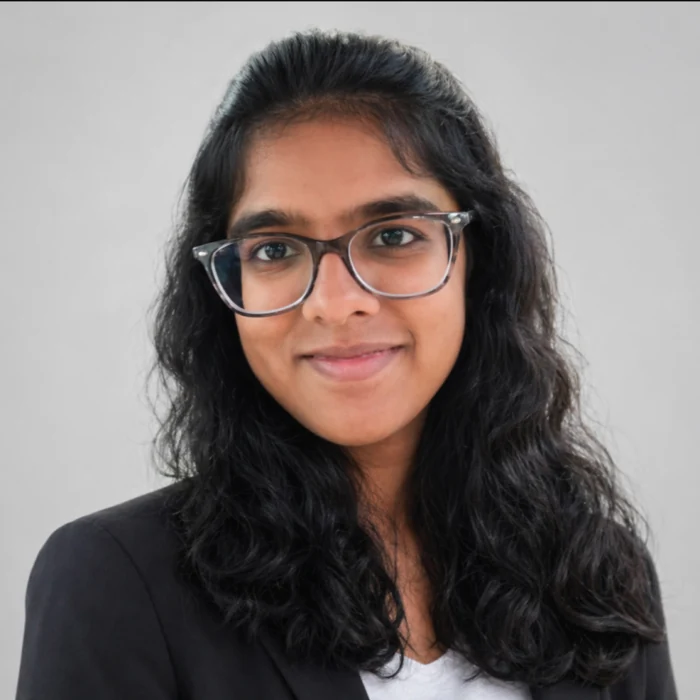
Raina Talwar Bhatia

Raina Talwar Bhatia

Research Affiliate

Raina Talwar Bhatia is a doctoral student in Public Policy at Harvard University, on the Science, Technology and Policy track, where she works on governance approaches for AI-bio risk. She did much of her AI research at Stanford, studying how twenty states have built AI regulatory regimes for the Hoover Institution, evaluating large language models for medical evidence synthesis on a Gates Foundation-funded project, and co-authoring a framework for mitigating AI misuse in biomedical research in Nature Machine Intelligence. In 2023 she represented the Nuclear Threat Initiative’s Bio Youth Delegation at the Biological Weapons Convention in Geneva, presenting research on laboratory biosecurity across different national contexts.

Vidur Kumar

Vidur Kumar

Research Affiliate

Vidur Kumar holds an MA in International Relations from Johns Hopkins University's School of Advanced International Studies (SAIS). His interests focus on AI governance, national security, and how middle powers can shape the development and oversight of advanced AI. His research has examined South Korea's AI strategy and India and US semiconductor cooperation. He previously worked as a Program Executive at the Ananta Aspen Centre, supporting international policy dialogues, and served as an Assistant Editor at the SAIS Review of International Affairs.

Valmik Nahata

Valmik Nahata

Research Affiliate

Valmik Nahata is a researcher at UC San Diego working on AI for scientific discovery and human welfare, with interests in international humanitarian law and the governance of advanced AI. His recent research has been featured at NeurIPS and ECCV workshops and recognized by Apart Research and BlueDot Impact. He has discussed AI safety and governance with safety leads at frontier AI labs and current and former U.S. government staff. He also contributes to open-source benchmarks for evaluating language and multimodal models.

Allan Ochola

Allan Ochola

Research Affiliate

Allan is an AI safety researcher working at the intersection of AI evaluation, mechanistic interpretability, and biological AI risk. His research focuses on developing reliable methods for assessing model capabilities and understanding the limitations of existing evaluation approaches.

His work spans biological capability evaluation, protein foundation model evaluation, and sparse autoencoder interpretability. He designs reproducible experiments to investigate where models and evaluations break down, identify confounding factors, and assess the robustness of evaluation findings across different conditions.

Allan has also led the development and deployment of AI-assisted decision-support systems across six Kenyan counties. With a background in computational research and technology governance, he works to connect technical evaluation with practical decisions about AI safety, accountability, and oversight. He is finalizing his Master in Microbiology at Kenyatta University in Kenya.

Sudhiksha Kandavel Rajan

Sudhiksha Kandavel Rajan

Research Affiliate

Sudhiksha Kandavel Rajan is an MS in AI student at Northeastern University, an AI Security Fellow at the Heron AI Security Fellowship, and a Fellow in MIT AI Alignment's Hermes research fellowship. She works on agentic monitoring and oversight, with a focus on the reliability of AI safety evaluations. She's especially interested in how we build evaluations of autonomous agents that stay trustworthy as the agents get more capable.

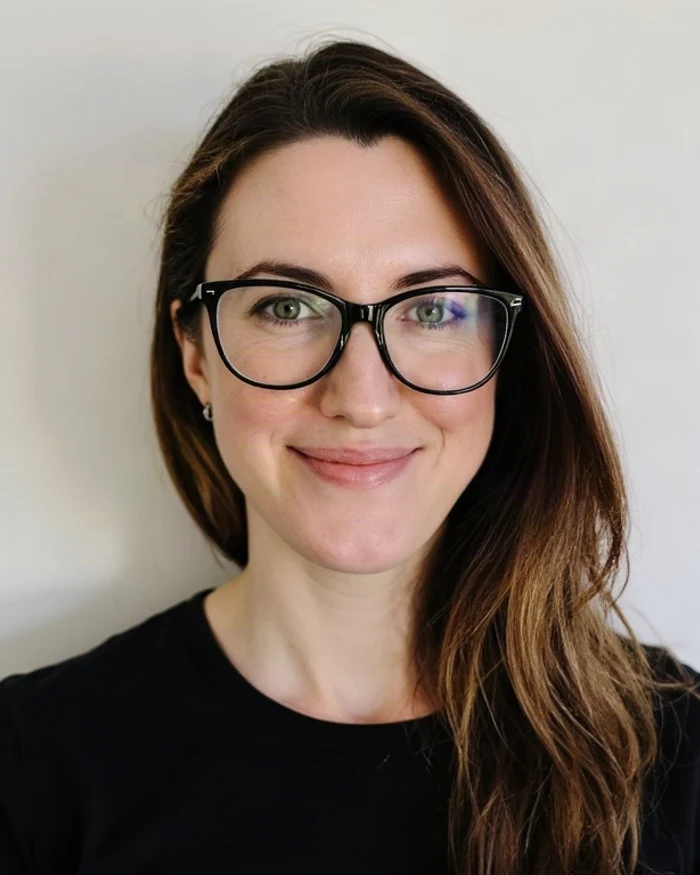
Kara Schneider

Kara Schneider

Research Affiliate

Kara Schneider is a Research Affiliate at Syntony, specializing in AI governance, emerging technology security, and international human rights law. Her research examines the intersection of artificial intelligence, institutional accountability, and the protection of human identity and historical testimony, with particular attention to synthetic media, evidentiary integrity, and emerging technological risks.

Previously, Kara worked with UNESCO's Social and Human Sciences Sector in Paris, supporting initiatives on scientific freedom and the safety of scientists, and with International Bridges to Justice in Geneva on international justice and human rights programming.

She holds an MSc in International Relations and International Law from the University of Aberdeen and an MSc in Human Rights and Data Science from the American University of Paris. She is currently pursuing an Advanced Master in European Governance at Vrije Universiteit Brussel, specializing in foreign and security policy.

Her current research explores anticipatory governance for emerging technologies, including AI assurance, quantum computing, and the protection of sensitive historical records against AI-enabled manipulation.

Dr. Csaba Tóth

Dr. Csaba Tóth

Research Affiliate

Dr. Csaba Tóth is a political scientist from Budapest, presently working at the intersection of politics and AI. He examines how political incentives, public opinion and institutions shape AI's future, and what it takes to make desirable outcomes politically possible. He also works as a special advisor and teaches at the Central European University Democracy Institute Leadership Academy.

He brings more than twenty years of experience across government, campaigns, European politics, and academia. He co-founded Hungary's Republikon Institute, served as Chief of Staff to Katalin Cseh MEP, then a Vice-President of Renew Europe, and was an elected board member of the European Liberal Forum. He has been advising leaders and political campaigns for 15+ years. He taught political science at Eötvös Loránd University. His books and essays examine political institutions, campaigning and even the politics of science fiction.

Umar Zafar

Umar Zafar

Research Affiliate

Umar Zafar is a Pakistani AI policy researcher and nonprofit founder based in Washington, DC. He holds an MA in International Relations from Johns Hopkins University's School of Advanced International Studies, where he was a Public Service Fellow. He has contributed to the Center for AI and Digital Policy, the SNF Agora Institute and is a fellow at Sentient Futures working on alternative proteins and AI. Umar founded Daadras Foundation, a nonprofit supporting education, humanitarian relief, and peacebuilding in Pakistan. Across his research and public service, he asks whose knowledge informs policy, whose interests it serves, and how institutions can become more accountable to the communities they affect.

Eileen Hartnett

Eileen Hartnett

Research Affiliate

Eileen Hartnett is an AI safety researcher focused on how we evaluate advanced AI systems and whether those evaluations measure what they claim to. At Perplexity AI, she led the development of a clinician-validated healthcare benchmark, developed and validated LLM-as-judge systems, and led safety and bias evaluations.

Her research explores how evaluation design and measurement choices shape conclusions about model behavior, with an emphasis on reproducible methods. Her current interests include evaluation awareness, agentic AI systems, and AI oversight and control.

She has a background in neuroscience research and quantitative analysis at Columbia University, where she also earned an MS in Epidemiology.

Dharini Bathia

Dharini Bathia

Research Affiliate

Dharini Bathia is an applied economist with a background in international development, policy research, and quantitative analysis. She holds a PhD in Public Policy from the University of North Carolina at Chapel Hill and has worked with UNICEF and the World Bank, as well as held a faculty position at UNC Chapel Hill.

Her work has focused on institutions, economic and social policy, and using empirical research to understand complex policy problems. More recently, she has been applying this perspective to questions around AI safety and governance.

Dharini is currently contributing to the SPAR Global AI Risk Observatory, where her work examines how companies identify and disclose AI-related risks at scale. She is particularly interested in the institutional and governance challenges that emerge as AI becomes increasingly integrated into organizations and economies.

Open roles and
research collaboration

Explore opportunities

Trusted Red Team Network

Red teamers beyond the core team

Syntony engages a network of vetted red teamers for adversarial testing, including top 5 performers in Gray Swan Arena competitions and top performers on HackerOne and Hack The Box. About the Trusted Red Team Network ↗

What should we test next?

Tell us about the system and the decision you are facing. We aim to reply within two business days.